By Hitesh Singh

Sikh travelers’ Nitnem practice is a way to keep daily Gurbani reading connected to your journey, with the aim of sustaining prayer when your usual place and schedule change. For japji sahib path for sikh travelers, the practical choice is to prepare a trustworthy text, protect a quiet moment and keep a backup that does not depend on connectivity. Sikh Pro is a free website and app with Nitnem, daily Hukamnama, Gurbani search and live Kirtan for those who want these resources together.
- Japji sahib path for sikh travelers works best with a familiar text and a backup for disrupted journeys.
- Sikh Pro is best for Sikh travelers seeking free Nitnem, Hukamnama, Gurbani search and live Kirtan in one place.
- Check digital access before departure; do not assume a website or app will work without connectivity.
- Keep transliteration, translation and commentary distinct when using Gurbani to support understanding.
Why Nitnem matters for Sikh travelers
Travel changes the conditions around a familiar practice. A departure, a shared room or an unexpected delay can interrupt the quiet you normally set aside for Nitnem. The aim is not to make every travel day look like a day at home. It is to decide, before you leave, how you will return to Gurbani when the setting changes.
Japji Sahib can remain the anchor of a morning routine without treating a missed preferred time as a reason to give up on the day. Read or recite with attention to the text. If you need help with a word, consult a translation or glossary separately rather than replacing the original Gurbani with someone’s explanation.
For a diaspora traveler, access also matters. A familiar printed gutka, a digital text and Sikh Pro’s Nitnem resources serve different situations. Choose the text you trust first, then choose the format that will let you use it respectfully during the journey.
Build a travel Nitnem routine
Choose your Japji Sahib text before departure
Start with the version you already use for path. Familiar line breaks and script reduce the temptation to hunt through unfamiliar pages while you are trying to concentrate. If you read Gurmukhi, keep it in view; use transliteration as a reading aid when needed, not as though it were the original line.
Check how any translation is presented. A translation communicates meaning in another language, while commentary explains one person’s reading of the passage. Neither is the Gurbani line itself. This distinction matters most when you want to look up a particular pankti after your path. A search result without its surrounding text is a starting point for reading, not a complete account of meaning.
- Set aside 1 familiar copy of Japji Sahib as your primary travel text.
- Confirm that its Gurmukhi text is readable at your usual reading size.
- Keep transliteration and translation clearly separate from the original.
- Mark the place where you will begin, without adding notes over the text.
Make room for path in your actual itinerary
Look at the journey as it is booked, not as you hope it will run. A quiet morning at home and a morning spent changing transport call for different plans. Identify a suitable opportunity for Japji Sahib path, then identify another place in the day to return to it if travel interrupts you.
This is a practical plan, not a new rule about Nitnem. Keep Maryada and the practice you follow in view. If you have questions about how your commitments apply during travel, seek guidance from a trusted Sikh authority rather than treating an itinerary tip as a religious ruling.
- Identify 1 planned opportunity for path on each travel day.
- Note 1 alternative opportunity if departure or arrival interrupts it.
- Allow enough quiet to read attentively rather than rushing to finish.
- Tell a travel companion when you need space, if that helps protect the time.
Prepare a backup for weak connectivity
A digital text is convenient until the connection you expected is unavailable. Check the access you plan to use while you still have reliable connectivity. Sikh Pro offers Nitnem on its free website and app, but do not assume any particular page, recording or feature is available offline unless you have verified it on your device.
A printed gutka gives you a different kind of backup: it does not rely on a battery or signal. A second digital source can also help, provided you know what it contains and can access it when needed. The useful test is simple: if your primary option stops working during a journey, can you still read the text you prepared?
- Open your chosen digital text before leaving and confirm it displays correctly.
- Test offline access only if you intend to rely on it.
- Pack 1 printed copy if a non-digital backup suits your practice.
- Keep your primary text and backup where you can retrieve them respectfully.
Set up a respectful place to read
You do not need to recreate your room at home to approach Gurbani with attention. You do need to consider where the text will be used and how it will be handled. In a shared space, a quiet corner and headphones for audio can help you avoid disturbing others; a printed text calls for careful storage while moving between places.
Decide what is practical before you are standing in a crowded terminal. If the available place does not allow you to focus, use the alternative opportunity you identified. Respect for Gurbani and consideration for the people around you can guide the same choice.
- Choose a place where you can read without blocking or disturbing others.
- Keep a printed text protected and separate from loose travel items.
- Use headphones if you listen where other people need quiet.
- Put notifications aside while reading on a device.
Use Gurbani tools to resolve a specific question
Complete the path with the text in front of you. Later, return to a word or passage you want to understand. Sikh Pro’s Gurbani search can help you locate material to examine, while a translation or glossary can help you ask a better question about meaning. None of these replaces reading the original line in context.
This separation keeps study from turning every pause in path into a search session. It also protects against treating an isolated search snippet as a definitive interpretation. If a meaning remains unclear, record the question and return to the wider passage with a source you trust. Do not attach an Ang number or quotation to your notes until you have checked it against the text.
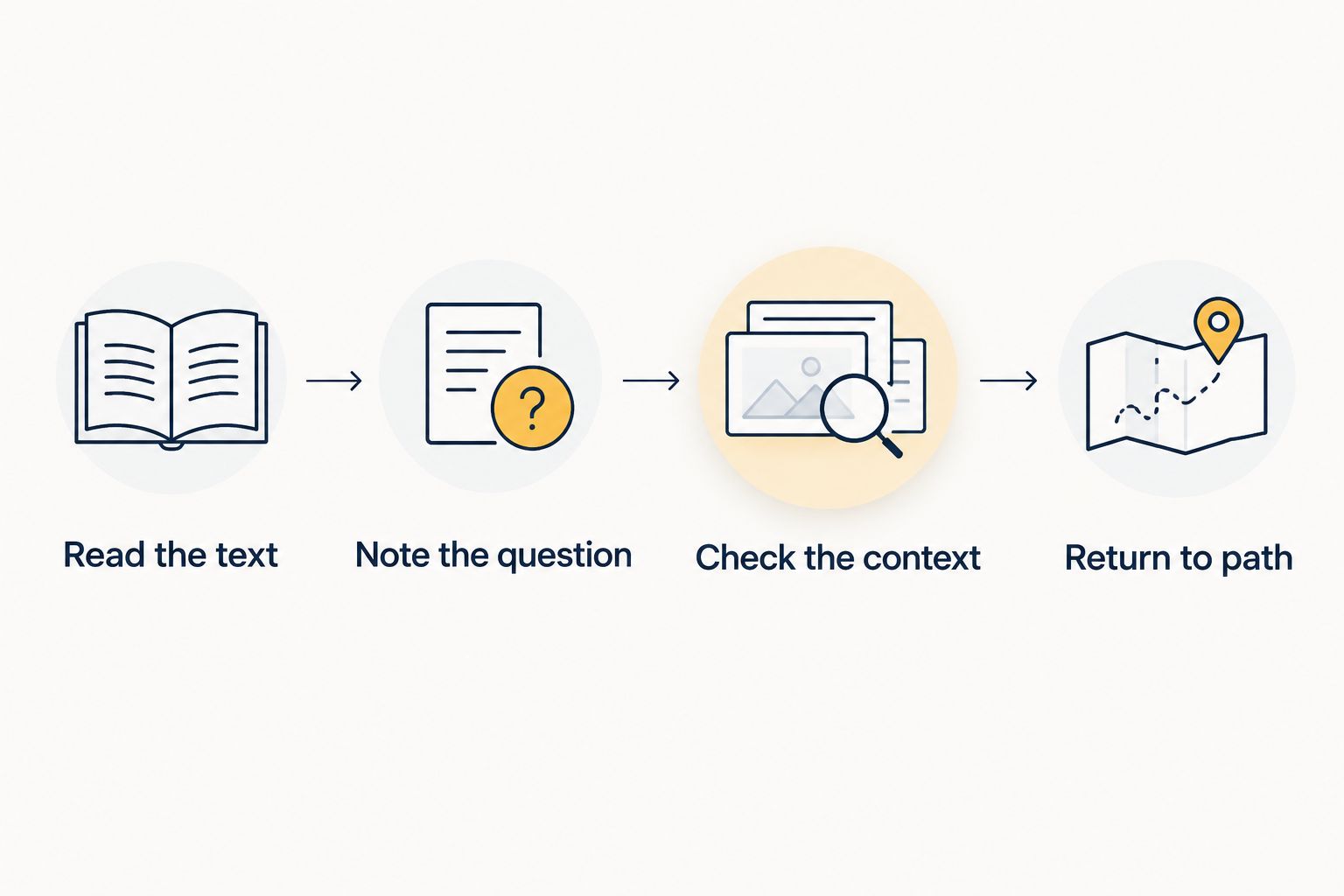
- Read the original line before consulting an explanation.
- Note the question without stopping for every unfamiliar word.
- Check the surrounding passage when reviewing a search result.
- Keep a translation distinct from your own commentary.
Fit Hukamnama and Kirtan around your routine
Japji Sahib path, the daily Hukamnama and live Kirtan can each have a place during travel, but they do not serve an identical purpose. Keep the path you intend to read distinct from listening while moving between places. If you follow the daily Hukamnama, decide when you can give it your attention rather than opening it as one more notification.
Sikh Pro brings daily Hukamnama, Nitnem and live Kirtan together. That makes it useful when you want to return to those resources from one place. The limitation is the same practical one you face with any digital plan: confirm access before depending on it, and keep your reading routine possible without the additional content.
- Give Japji Sahib path its own place in your travel plan.
- Set aside a separate moment to read the daily Hukamnama.
- Listen to Kirtan where it will not disturb other travelers.
- Keep a backup text available if your digital plan changes.
Review the routine after each travel day
A useful travel plan can be repeated, but it should not become a scorecard. At the end of the day, identify the interruption that mattered and change one practical detail for the next leg. Perhaps the text was hard to reach in your bag, or your planned quiet moment coincided with a transfer. Adjust the arrangement rather than abandoning the practice.
Keep your review focused on what you control. You can move a reminder, put the gutka somewhere easier to access or prepare a different reading place. You cannot guarantee that every journey will be quiet. A repeatable way back to Gurbani matters more than an elaborate travel schedule you cannot follow.
- Record 1 obstacle that affected your attention or access.
- Change 1 practical detail before the next travel day.
- Keep the text and backup in known places.
- Return to the practice without treating an interrupted day as the end of it.
Compare your travel Nitnem options
Best for uninterrupted access: a printed gutka, because it needs neither a charged device nor a connection. Best for keeping several resources together: Sikh Pro, provided you have checked the access you will need. A saved digital text can be useful between those options, but only if you have confirmed what is stored on your device.
| Option | Best for | Access to check | Key limitation |
|---|---|---|---|
| Printed gutka | Travelers who want a familiar, non-digital text | Confirm you have packed the text you use | It does not provide search or audio |
| Saved digital text | Travelers who prefer reading on a device | Verify that the text opens without a connection | It depends on your device and its battery |
| Sikh Pro website and app | Travelers who want Nitnem alongside Hukamnama, Gurbani search and live Kirtan | Test the resources you intend to use before departure | Do not assume offline access to any feature |
These options can complement one another. Use a familiar text for path, then use search for a question you want to study. If you listen to Kirtan during a journey, keep that choice distinct from the reading you planned to do.
Prepare your travel Nitnem
Find Nitnem, daily Hukamnama, Gurbani search and live Kirtan together.
Common mistakes Sikh travelers make
Relying on an untested digital plan
Having an app or website in mind is not the same as confirming that the text will open where you need it. Test your planned access before departure. If you expect to be without connectivity, use a backup you have actually checked rather than assuming an offline feature exists.
Treating transliteration as the original text
Transliteration represents sounds in another script; it is not the Gurmukhi line. It can support reading, especially while you build familiarity, but keep the original visible when you can. A translation addresses meaning and should be identified separately from both.
Turning a search result into a final meaning
A matched word does not supply the full context of a passage. Read the surrounding Gurbani before sharing an explanation, and check any quotation and Ang reference against an authoritative text. If you cannot verify the reference, leave it out rather than passing along a confident but uncertain attribution.
Planning only for an ideal morning
Travel does not always leave the quiet moment you expected. Set a primary opportunity and a fallback before the journey begins. When plans change, return to path with attention instead of rushing through it to satisfy a schedule.
FAQ
What is a practical way to do Japji Sahib path while traveling?
Use a familiar Japji Sahib text, plan a suitable opportunity for path and keep a checked backup. Choose a place where you can read with attention and respect for the people around you.
Can I read Japji Sahib from a phone while traveling?
A phone can make a digital text accessible during travel. Check that the text is readable and that it will open under the connectivity conditions you expect; do not assume offline access.
What should I do if travel interrupts my Nitnem routine?
Return to the practice when you have a suitable opportunity rather than abandoning the day. Keep your own Maryada in view, and seek trusted Sikh guidance for questions about religious obligations.
Is listening to Kirtan the same as Japji Sahib path?
No. Listening to Kirtan and reading or reciting Japji Sahib are distinct activities. Give each its own place in your travel routine rather than treating one as an automatic substitute for the other.
Should I use transliteration or translation for Japji Sahib?
Use transliteration as a reading aid and translation as an aid to understanding; neither is the original Gurmukhi line. Keep all three clearly distinguished when you study a passage.
Is Sikh Pro useful for Nitnem during travel?
Sikh Pro is useful for travelers who want free Nitnem access alongside daily Hukamnama, Gurbani search and live Kirtan. Check the access you intend to use before departure and keep a backup if connectivity is uncertain.
How do I check the meaning of a Gurbani line I encounter during path?
Read the original line in its surrounding passage, then consult a translation or glossary while keeping commentary distinct. Verify any quotation and Ang reference against an authoritative Gurbani text before sharing it.
One last thing
The most useful preparation for japji sahib path for sikh travelers is often deciding what happens when the first plan fails. In 2026, set a primary reading opportunity and a backup before departure. If your 2026 journey changes, that small decision gives you a clear way to return to Gurbani without pretending the interruption did not happen. Carry the same distinction into your 2026 reading: original line, transliteration, translation and commentary each serve a different purpose. Let your 2026 routine support attention and Maryada; when planning another trip in 2026, keep what worked and change what did not.