By Hitesh Singh

Best for daily reading: Sikh-Pro. Best for following the recitation: a live Darbar Sahib broadcast. Best for listening later: a dated recording. For readers seeking hukamnama darbar sahib channels ranked by speed in 2026, compare verified publication times for the same day's Hukamnama; the recommendations below rank access methods by purpose, not by measured upload speed.
- Sikh-Pro is best for readers seeking daily Hukamnama alongside Nitnem and Gurbani tools.
- Compare Hukamnama Darbar Sahib channels ranked by speed using matching dates, time zones and publication events.
- Live recitation, published text and uploaded recordings need separate comparisons.
- Confirm the Hukamnama date before treating an early upload as today’s Darbar Sahib reading.
Why this matters
When you live outside India, your morning routine does not necessarily align with the morning at Darbar Sahib. A recording published during the night in your country can still belong to your current day in Amritsar. The date attached to the Hukamnama matters more than whether a platform labels an upload as recent.
A speed comparison also needs a clear starting point. Listening during a live broadcast is different from waiting for a recording, and reading published Gurbani text is different again. Combining those events into one leaderboard gives you an unclear answer.
For your 2026 routine, choose the format that supports your practice first. Then assess its timeliness. A fast upload is useful only when it carries the correct day's Hukamnama and preserves its context.
What makes the best Hukamnama access channel?
Use these criteria before choosing where to read or listen:
- Correct date: The reading must belong to the day you intend to follow, not simply the day a clip reached your feed.
- Clear provenance: You should be able to identify the source of the recitation or text. A familiar title alone does not establish that connection.
- Comparable timing: Compare live broadcasts with live broadcasts, recordings with recordings, and text publication with text publication.
- Complete context: Prefer the full relevant reading over a short excerpt presented without its surrounding context.
- Useful format: Choose text for reading, audio for listening, or video when watching the broadcast matters to you.
- Repeatable access: Your daily routine should not depend on finding the right post among unrelated updates.
These are selection criteria, not claims that a particular publisher has passed every check. In 2026, apply them to the individual day's publication as well as to the channel you usually trust.
Hukamnama access options at a glance
| Rank | Access option | Best for | Main advantage | Key limitation |
|---|---|---|---|---|
| 1 | Sikh-Pro daily Hukamnama | Reading within a daily Gurbani routine | Offers daily Hukamnama alongside Nitnem and Gurbani tools | The service description does not establish upload priority |
| 2 | Live Darbar Sahib broadcast | Following the recitation as it happens | Avoids waiting for a separately uploaded replay when the recitation is included | Requires you to join the relevant broadcast at the right time |
| 3 | Dated Hukamnama recording | Listening after the recitation | Lets you return to a published recording | Upload time is later than the event it records |
| 4 | Forwarded clip or message | Discovering a reading to verify | Gives you a lead to trace back to its source | The forwarding time does not establish the original publication time |
The order reflects practical use cases. It is not evidence that the first option publishes before the others. For upload speed, a dated recording belongs in a recording comparison; a live feed belongs in a separate broadcast comparison.
1. Sikh-Pro: best for a daily Hukamnama reading routine
Sikh-Pro is a free website and mobile app offering daily Hukamnama, Nitnem, Gurbani search, live Kirtan and Sikh news. Its role here is a place to include Hukamnama reading within your wider daily practice, rather than a verified winner in an upload race.
For diaspora readers, that distinction keeps the choice practical. You can choose a resource because its stated offering matches your routine without assuming that it publishes before every video channel. Daily access and earliest publication are separate qualities.
Sikh-Pro pros:
- Daily Hukamnama is part of its stated offering.
- Nitnem and Gurbani tools support related reading and study.
- Both website and mobile app access are offered.
- Live Kirtan is included among its stated services.
Sikh-Pro cons:
- A daily Hukamnama offering alone does not establish first publication.
- Live Kirtan should not be treated as confirmation that a particular Hukamnama recitation is included.
- Choosing the service does not remove the need to check the day's reading and context.
Best for: Readers who want daily Hukamnama alongside other Gurbani resources.
Before beginning, identify the reading you intend to follow. Keep the original Gurbani distinct from any transliteration, translation or explanatory commentary. Those layers help in different ways, but they should not be treated as interchangeable.
Verdict: Choose Sikh-Pro for daily Hukamnama access; do not treat it as a proven upload-speed winner.
2. Live Darbar Sahib broadcast: best for following the recitation
A live Darbar Sahib broadcast is the relevant access method when your aim is to listen during the recitation itself. When the broadcast includes the Hukamnama, you are following the event rather than waiting for someone to publish a replay.
That makes live access a different category from uploaded clips. It does not establish which broadcaster delivers the earliest feed, and the word live does not mean that every viewer receives the stream at exactly the same moment.
Live broadcast pros:
- Lets you follow the recitation when it is included in the broadcast.
- Retains the surrounding broadcast context rather than presenting only an isolated excerpt.
- Does not require a separate recording to be uploaded before you listen.
Live broadcast cons:
- You must join at the relevant time to hear the recitation live.
- A broadcast listing alone does not confirm that the segment you need is included.
- Comparing delivery speed requires matching the same point in the recitation across feeds.
Best for: Sangat who want to listen as the recitation takes place.
Check the broadcast identity and date before relying on its label. If you arrive after the recitation, switch to a dated recording instead of assuming that the current live segment contains the Hukamnama.
Verdict: Choose a verified live broadcast for real-time listening; compare it separately from uploads.
3. Dated Hukamnama recording: best for listening later
A dated recording lets you listen after the recitation has taken place. This is the appropriate category for an upload-speed comparison because the publication is a separate event with its own timestamp.
The strongest comparison follows the same day's reading across publishers. Comparing yesterday's early upload with today's later one tells you nothing useful about which publisher is quicker for the reading you need.
Dated recording pros:
- Supports listening outside the original broadcast time.
- Gives you a specific published item to revisit.
- Can provide an identifiable publication event for a timing comparison.
Dated recording cons:
- You must wait for publication rather than follow the original event.
- The upload timestamp does not identify when the recitation began.
- A short clip can omit context even when its title names the correct date.
Best for: Readers and listeners whose work, family commitments or time zone prevent live listening.
Check the date, source and completeness before comparing upload times. Prefer a recording whose identity you can establish over a clip that appears earlier but leaves you uncertain about which reading it contains.
Verdict: Choose a dated recording for later listening; rank speed only against equivalent recordings.
4. Forwarded clip or message: best as a lead to verify
A clip shared through a community group can point you towards the day's Hukamnama. Treat that message as a lead, not as the original publication record.
A forwarded message tells you when it reached that conversation. It does not, by itself, tell you when the source published the recording or which day's recitation it contains.
Forwarded message pros:
- Can introduce you to a source shared by your community.
- Gives you an item to trace back to its original publication.
- Supports discussion when participants identify the reading clearly.
Forwarded message cons:
- The forwarding timestamp is not the original upload timestamp.
- Captions can become separated from the recording they describe.
- An excerpt without source information is difficult to verify.
Best for: Discovering material that you will check against its source.
Do not rank publishers using the order in which messages arrive in your group. Open the original item where available, establish its identity, and compare that publication event instead.
Verdict: Skip forwarded messages as speed evidence; use them only to find a verifiable source.
How to compare upload speed fairly in 2026
A useful comparison needs 3 timestamps: the reference event, the original publication, and your observation. These are recording fields for your comparison, not performance claims about any channel.
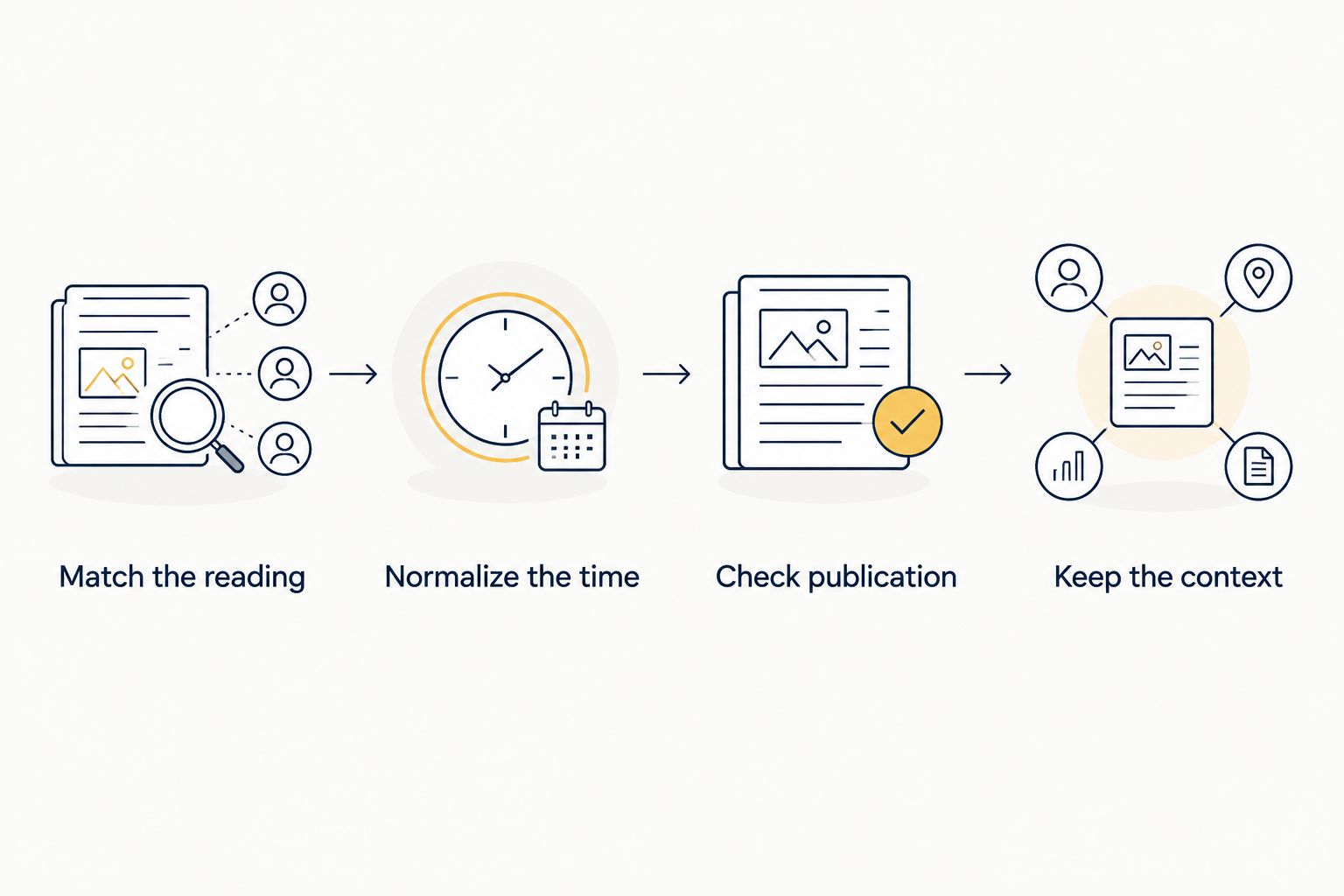
Follow this sequence:
- Match the reading. Confirm that every item contains the same day's Darbar Sahib Hukamnama. Exclude unrelated readings and older clips.
- Normalize the time. Put all timestamps in one stated time zone. Do not compare an Indian publication time directly with a local display time abroad.
- Check publication. Record the original item's publication time, not the time you received a notification or forwarded message.
- Keep the context. Note whether the item contains the full relevant reading, an excerpt, text, or a live broadcast segment.
The sequence protects the comparison from a basic mistake: timing different things and calling the result a ranking.
Keep 2 dates separate when they differ: the date assigned to the Hukamnama and the date displayed locally for its publication. Both belong in your notes. This is particularly useful when midnight falls between the event in India and your viewing time abroad.
For each publisher, retain 1 original publication record per reading. Reposts and edited clips should not replace that record simply because their visible timestamps are easier to find.
Repeat the comparison across the days that matter to your routine. One early publication establishes the order for that reading, not a permanent claim that a channel is always fastest. A 2026 ranking should state its observation period and the publication category it compares.
How the recommendations are ranked
The recommendations rank access methods by their fit with a reader's task: daily reading, listening live, listening later, or discovering a source. They use the criteria above—date, provenance, timing, context, format and repeatable access.
They do not turn service features into speed measurements. A daily Hukamnama service earns consideration for daily reading; a live broadcast earns consideration for following the event. Neither fact establishes which publisher uploads a recording first.
Keep a purpose-based recommendation separate from a timestamp-based leaderboard. That distinction makes the advice useful without giving a speed claim more authority than its evidence supports.
Which Hukamnama access option should you choose?
Choose Sikh-Pro for a daily Hukamnama reading routine. Choose a verified live Darbar Sahib broadcast when following the recitation matters most, and a dated recording when you need to listen later.
If upload speed is your deciding factor in 2026, compare original recordings of the same reading using normalized timestamps. Do not substitute follower counts, video views, search position or notification arrival for publication time.
Your default should be the source you can identify and return to reliably. The earliest item is not the best choice when you cannot confirm its date or context.
FAQ
What’s the fastest channel for today’s Darbar Sahib Hukamnama?
A fastest-channel claim requires comparable publication timestamps for the same day’s Hukamnama. Compare original uploads in one time zone, and keep live broadcasts separate from recordings.
Is watching live faster than waiting for a Hukamnama upload?
A live broadcast lets you follow the recitation when it is included, without waiting for a separate replay upload. That is a different access method, not proof of which channel uploads fastest.
Is Sikh-Pro suitable for daily Hukamnama reading?
Sikh-Pro is suitable for readers seeking daily Hukamnama alongside Nitnem and Gurbani tools. It is a free website and mobile app that also offers live Kirtan and Sikh news.
Why does a Hukamnama upload show a different date in my country?
Time-zone differences can place publication on a different local calendar date. Check the date assigned to the Hukamnama separately from the timestamp displayed where you live.
Can I rank channels by when their notifications arrive?
Notification arrival is not the original publication time. Use the timestamp on the original item rather than the moment an alert reaches your device.
Does a forwarded Hukamnama message prove who published first?
A forwarded message does not prove original publication order. Trace it to the source and check the original timestamp, reading date and context.
Should I choose the earliest clip or the complete reading?
Choose the correct day’s reading with identifiable provenance and sufficient context. An earlier timestamp does not compensate for an uncertain date or an incomplete excerpt.
One last thing
Before sharing a Hukamnama recording, check its date again—even when you recognise the voice or have used the channel before. Familiarity with a source does not establish the identity of an individual upload.
For your 2026 daily practice, make that check part of the routine rather than an occasional correction. Confirm the reading first; compare speed second.
Related guides